Connecting Personal Wealth and Company Finances: A Guide for Business Owners
About 70 percent of small businesses in Canada survive their first five years, according to RBC Insurance, yet a much smaller share of owners ever build a coordinated plan connecting what happens inside the company with what happens in their own household. Most entrepreneurs treat these as two separate worlds. One is managed by a bookkeeper or accountant, the other handled quietly on the side, and the two rarely talk to each other.
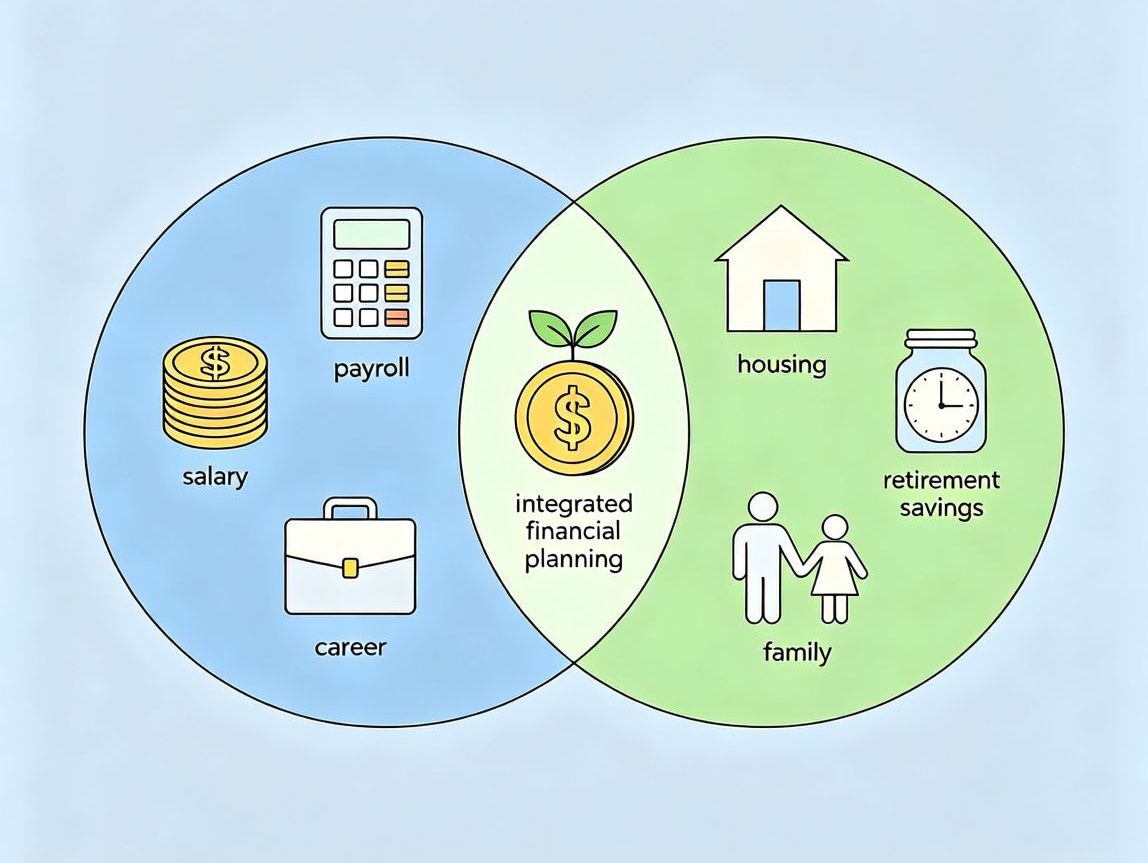
That gap tends to show up at the worst possible moment, whether it’s a tax bill that could have been reduced, a retirement date pushed back for no good reason, or a business sale that leaves less on the table than it should. A complete financial strategy treats the business and the household as one system, so a decision made in one area does not quietly create a problem in another. The sections below walk through the areas where that connection matters most.
Start by Separating Operating Funds From Surplus Capital
Before any planning can happen, the money itself needs a clear home. Operating funds, the cash needed to cover payroll, rent, and suppliers over the next few months, should sit apart from any surplus the company has built up beyond what the business actually needs to run. Research from Avalon Accounting notes that a corporation is a distinct legal entity, and blending its funds with a shareholder’s personal account makes it far harder to prove what belongs to the business if the Canada Revenue Agency ever asks.
Beyond compliance, this separation gives an owner something more useful day to day: an honest read on how the business is actually performing. Findings from BBS Chartered Professional Accountant point out that mixing accounts can weaken the legal protection incorporation is supposed to provide in the first place, sometimes described as piercing the corporate veil. Once operating cash and true surplus are distinguished, an owner can start asking a better question: what should that surplus actually be used for.
Review How You Pay Yourself
Salary and dividends are taxed differently, and the right mix depends on more than just the number on this year’s return. Data from Huang & Associates CPA shows that only salary counts as earned income for RRSP purposes, and reaching the maximum RRSP contribution room of roughly $32,490 for 2025 would require about $180,000 in salary income. Take dividends exclusively, and that retirement savings room never gets created.
Salary also builds Canada Pension Plan credits. As reports from PurposeCPA explain, salary triggers CPP contributions that translate into future pension benefits, while dividends free up more cash today at the cost of that future income stream. Neither option is universally better. A hybrid approach, often a modest base salary paired with dividends, tends to serve most owners best, but the exact split should be revisited annually as income and goals shift, not set once and forgotten.
Plan for Taxes Across Both Sides of the Ledger
Canada’s tax system is built around a concept called integration, meaning the combined tax on business income should land in roughly the same place whether it is earned personally or through a corporation. Studies published by Custom Accounting & CFO Advisory explain that corporations pay a lower rate on active business income, with additional personal tax applied once profits are distributed as dividends. In practice, integration is rarely perfect. Provincial tax rate differences and timing of withdrawals can tilt the outcome one way or the other, which is exactly why salary, dividends, and corporate retained earnings need to be reviewed together rather than in isolation.
Protect the Business Through Insurance
A business that depends heavily on one or two people carries a risk that rarely gets priced in until something goes wrong. Experts at PolicyAdvisor note that the death or disability of a key owner or partner can disrupt cash flow, debt repayment, and client relationships almost overnight. Key person insurance names the company as beneficiary and provides funds to cover revenue losses and the cost of finding a replacement, while a buy-sell agreement funded by life insurance gives surviving partners a fair, pre-arranged way to buy out a departing owner’s share without scrambling for financing.
Build a Retirement Plan That Reflects How You Actually Earn
Business owners rarely have a workplace pension, which means retirement savings have to be built deliberately rather than by default payroll deduction. This is where the salary and dividend decision loops back around: an owner who leans entirely on dividends may unintentionally starve their own RRSP room, while one who takes a salary purely for tax reasons might miss opportunities to grow surplus inside a lower-taxed corporate structure. Individual pension plans and corporately held investments are additional tools worth reviewing with an advisor, since the right combination depends on age, income stability, and how much capital the business itself will eventually need to fund a transition.
Develop a Succession Plan Before You Need One
Despite how much rides on it, succession planning remains one of the most neglected areas of business ownership. Reports from the Canadian Federation of Independent Business indicate that only a small fraction of business owners have a formal, written succession plan in place, even though a large majority expect to exit their business within the next decade. A succession plan is not a single document signed once. It is an ongoing process of identifying a successor, funding the transition through tools like insurance-backed buy-sell agreements, and revisiting the plan as the business and family circumstances change.
READ ALSO: Enhancing Business Success through Strategic Financial Planning
Bringing It All Together
None of these pieces function well in isolation. A salary decision made without considering RRSP goals, a surplus left uninvested because no one reviewed it against retirement timelines, or a succession plan that exists only in conversation rather than in writing all point to the same underlying issue: personal and corporate finances were treated as separate projects instead of one connected plan. Owners who revisit these decisions together, ideally with an accountant and a financial planner working from the same picture, tend to avoid the surprises that catch others off guard. As a business grows and personal circumstances shift, that coordinated view becomes less of a nicety and more of a necessity.